
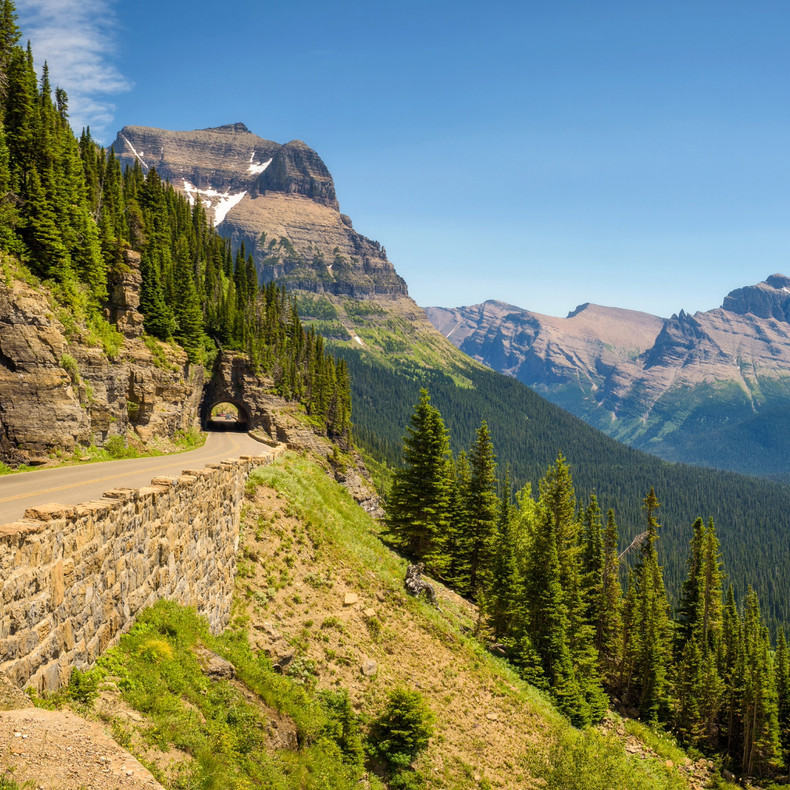
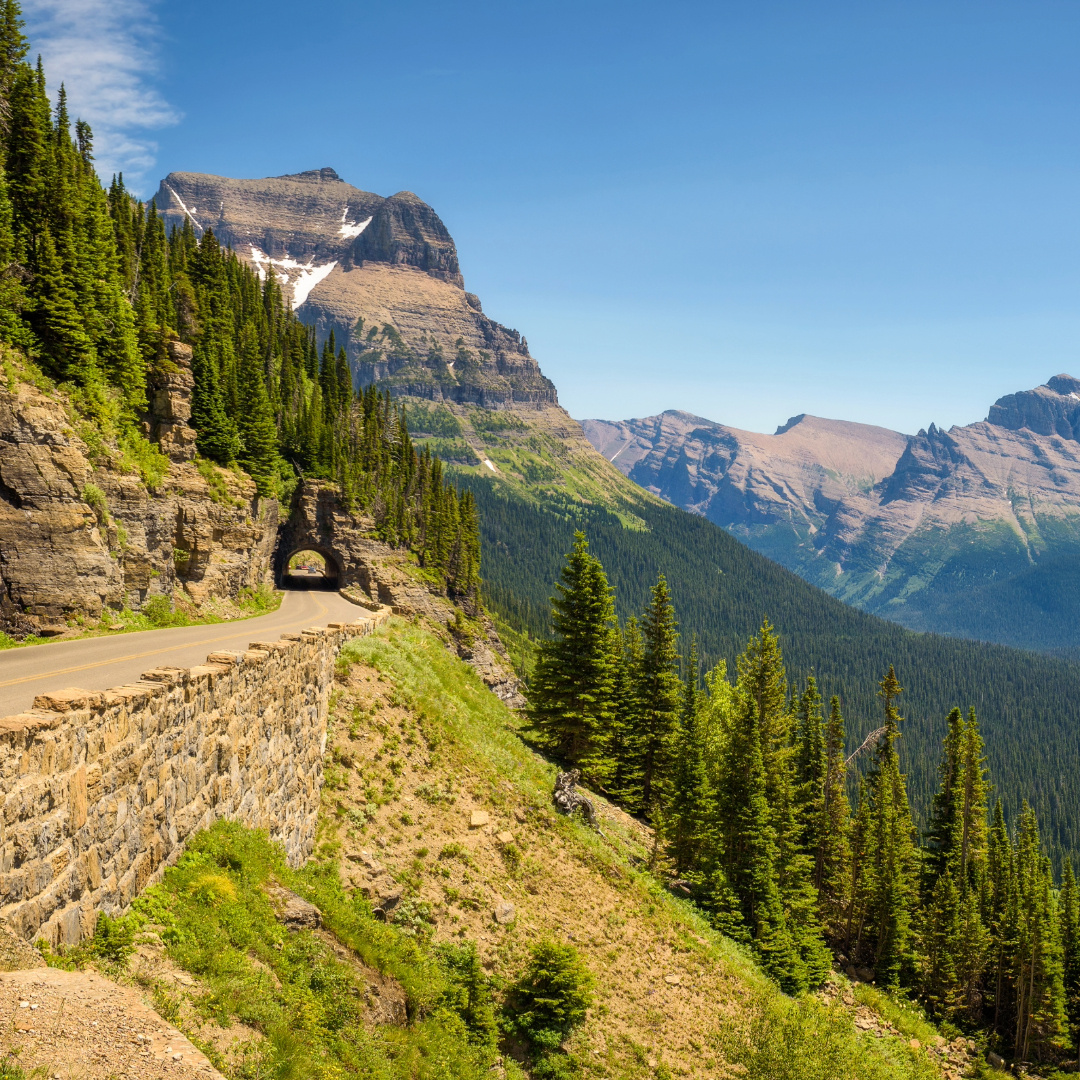
Going-to-the-Sun Road is Glacier National Park’s signature drive, the kind of western road trip experience that stays with you long after you’ve left the mountains behind. It’s a route people talk about for years, not only because of its scenery but because of how it feels to travel mile by mile through changing landscapes.
Table of Contents:
- Why Going-to-the-Sun Road Is Special
- Planning Your Sun Road Trip
- Driving Tips for Going-to-the-Sun Road
- 14 Best Stops Along Going-to-the-Sun Road
- Plan Your Sun Road Trip With Rand McNally
- FAQ
If you’re planning a visit, this guide will help you understand what the road is, how to prepare for reservations and seasonal closures and which stops are worth your time. We’ll walk through everything you need to know so you can enjoy the drive with confidence. Let’s start with what makes this road so special.
What Is So Special About Going-to-the-Sun Road?
Going-to-the-Sun Road in Montana is special because it crosses an entire mountain range in a single 50-mile drive, climbing over the Continental Divide at Logan Pass and connecting the west and east sides of Glacier National Park.
It’s one of the most remarkable routes in the country because it packs such dramatic variety into a single stretch of pavement. Also known as the “Road to the Sun” or “the Sun Highway,” the drive rises from lake-level forests through narrow canyons and up to the alpine world around Logan Pass. Along the way, you’ll watch ecosystems change as you climb, moving from cedar groves and mossy shade into windswept ridgelines where clouds skim the peaks.
Built in the early 20th century, the route is considered an engineering landmark and remains a beloved experience for visitors. More than anything, it’s the feeling of the air cooling as you climb, the clouds drifting at eye level and the chance to spot wildlife along the road that makes this drive unforgettable.
Planning Your Highway to the Sun Road Trip
A smooth trip begins with smart planning. Understanding when the road opens, where it starts and ends and how long you want to explore will help you make the most of your visit. Because reservation rules, construction projects and snow removal timelines shift each year, it’s important to check the National Park Service for current details before you go.
Below, we’ll walk through timing, logistics and the basics of navigating the going to the sun road Montana travelers look forward to every year.
When Is the Best Time to Drive Sun Road in Glacier National Park?
The best time to drive Sun Road in Glacier National Park is usually between early July and mid-October, when snow has melted from higher elevations and the full route is typically open.
Glacier National Park is open year-round, so knowing when to go is all about deciding what you hope to experience:
- Summer (July and August): Warm weather and long days make this the most popular season for hiking, boating and scenic drives. Traffic and parking reach their peak, so early morning or late afternoon offers a calmer experience.
- Fall (September to mid-October): Crowds thin out and temperatures stay pleasant, with bright larch colors and excellent wildlife activity. Some park services begin to scale back, and early storms can mean closures of higher sections without much warning.
- Spring (May and June): Fewer visitors than summer and full waterfalls at lower elevations make for a relaxed yet unforgettable experience. Higher alpine sections may still be snow-covered or under construction, meaning some areas might be off limits.
- Winter (mid-October through April): Very low crowds and a quiet, snow-covered landscape create a peaceful winter wonderland. The Sun Highway is closed to vehicle traffic for much of the season, with limited access for skiing and snowshoeing.
An easy to fold map of Montana will help you plan alternate routes if weather changes your plans or if parts of the sun road Glacier National Park are temporarily closed.
How Long Does It Take to Complete Going-to-the-Sun Road?
It takes about 2 hours to drive the Road to the Sun without stopping.
However, to really soak it up, you’ll need to make some stops. Here are more realistic time frames:
- About 2 hours to drive end-to-end without stops
- Half-day (4–6 hours) with a few short walks and overlooks
- Full-day (8–10 hours) if you want to enjoy multiple trails and linger at viewpoints
If you want to add longer hikes such as Hidden Lake Overlook or the Highline Trail, plan 1–2 days so you can enjoy the route without rushing.
Where Does the Going-to-the-Sun Road Start and End?
Going-to-the-Sun Road begins near West Glacier at Apgar Village and ends near St. Mary on the east side of Glacier National Park. Here are a few highlights you can expect at each entrance:
- West entrance: Apgar Village, Lake McDonald and lower-elevation forests
- East entrance: St. Mary, wide valleys and access to several trailheads
Many travelers link the drive with U.S. Highway 2 to form a full loop around the park.
A map or state atlas makes it easy to picture this loop and see how the Road to the Sun connects with a wider Montana or Montana–Wyoming road trip.
What Are the Different Route Options for Highway to the Sun?
You can drive the Highway to the Sun in either direction — west to east or east to west — and each direction has its own character. Nervous drivers often prefer the east-to-west option, since it keeps them closer to the mountainside rather than the exposed edge.
West to East
Starting near Lake McDonald and Apgar Village eases you into the drive with calm lakeshore scenery before you begin the climb. This is the most common direction for many visitors and can feel steeper as you approach Logan Pass. It’s a gentle way to transition from forested terrain into high-elevation views.
East to West
Beginning in St. Mary brings you into open alpine scenery sooner. Drivers who prefer hugging the mountainside instead of the guardrail often find this direction more comfortable. You’ll descend gradually toward Lake McDonald with spacious views through wide, glacial valleys.
Driving Both Routes
If time allows, drive one direction and return via Highway 2 for a different perspective without repeating the same stretch. The park shuttle is another option, but many visitors prefer the flexibility of driving themselves and stopping wherever the moment feels right.
Tips for Driving the Sun Highway in Montana
Preparation goes a long way on a road that changes so much with elevation, weather and time of day. Glacier National Park’s Road to the Sun is manageable (and magical) for most drivers who approach it with patience and a flexible mindset.
Essential Tips for a Smooth Drive
- Know Reservation and Pass Requirements: You may need both a park entrance pass and a timed-entry or vehicle reservation in peak season. Check the NPS for current rules since they can change year to year.
- Understand Road Rules and Vehicle Limits: Some sections have length and width limits, and trailers aren’t allowed on the narrowest stretches. These guidelines help protect the road and ensure a safer experience for everyone.
- Choose the Best Time of Day: Early mornings and late afternoons often feel calmer, with softer light and slightly lighter traffic. Weekdays are usually quieter than weekends.
- Stay Wildlife-Aware: Keep a safe distance from animals, and be bear-aware. Pull into designated turnouts if you want to stop and look. Staying alert protects both wildlife and drivers.
- Check Closures and Weather Before You Go: Review road status, construction updates and weather forecasts the morning of your trip. Snow, rockfall or maintenance can temporarily close portions of the route, and an easy to read map of Montana will help if GPS drops.
- Give Yourself Plenty of Time: Add extra time for slower traffic, brief stops or simply letting a scene sink in. A relaxed pace often leads to a more memorable experience.
Adhering to these tips will ensure you see Going-to-the-Sun Road safely, and don’t miss any highlights.
What to Bring
Here are a few essentials to bring that will make the day comfortable and stress-free:
- A Montana atlas and gazetteer so you can see the whole park and surrounding highways even without cell service
- Food and water for the day so you don’t need to rush through limited-service areas due to hunger or thirst
- Full gas tank from gateway towns, since there are no fuel stations on the road itself
- Layers for changing weather, including rain shell, warm layer and sun protection
- Sun protection such as hats and sunscreen, especially at higher elevation
- Comfortable shoes for walking, especially if you plan on hiking the trails
- Binoculars to capture views from higher elevations and spot wildlife from a safe distance
Now that you have helpful tips to guide you on your journey, it’s time to explore the best stops along Going-to-the-Sun Road in Glacier National Park.
14 Best Stops on Going-to-the-Sun Road in Glacier National Park
This guide highlights the best places to pause, explore or take in the atmosphere along the Sun Highway in Montana. The stops are organized from west to east through the summit and down the east side. It’s a curated list designed to make planning simple, not a mile-by-mile breakdown. Most travelers enjoy picking a handful of stops rather than trying to fit in all 14 in a single day.
Western Side
The west side begins with lush forests, lake reflections and shady stretches that ease you into the day. It’s a calm introduction before the climb toward Logan Pass.
Apgar Village
Apgar is a welcoming base with visitor services, supplies and your first wide-open look at Lake McDonald. It’s a helpful place to confirm road conditions, as well as grab some food and use the restrooms before continuing to more remote stretches.
Lake McDonald
This long, glacial lake shifts with light throughout the day, from mild mornings to glowing evenings. Its shoreline trails make for easy walking before you start the ascent. Consider visiting in the earlier part of the day for easier parking and calmer waters.
Trail of the Cedars
This accessible boardwalk leads through an old-growth forest that feels cool and quiet. It also connects with the Avalanche Lake trail for those wanting more. This is one of the park’s most popular walks, so go in the morning to avoid crowds.
Avalanche Lake
A moderate hike brings you to a cirque lake surrounded by cliffs and waterfalls. Build in enough time to take in the alpine smells and enjoy the soothing sound of crashing cascades. Parking near the trailhead fills up early, so go before mid-morning to secure a spot.
The Loop
At this famous hairpin turn, you can look back at how far you’ve climbed. It’s a natural place to pause, switch drivers or catch your breath. This is one of the only safe pull-off points during this stretch, so take advantage of it for a moment of reflection.
Weeping Wall
Snowmelt spills down a rock face in early and mid-summer, creating a refreshing spray near the road. Use designated pullouts if you want to linger. Watch your footing, as the rock can be very slick.
Summit and High Country
This area covers the highest elevation portion of the sun highway Montana travelers often dream about, where the world feels bigger and more open.
Logan Pass
At roughly 6,646 feet, Logan Pass marks the high point of the road and the start of trails like Hidden Lake Overlook. Parking fills quickly, so early arrivals help you step straight into crisp air and sweeping views. Taking a shuttle service can help you avoid the battle for parking, too.
Jackson Glacier Overlook
This is one of the best opportunities to see roadside views of an actual glacier. It’s a quiet place to pause and take in both the sweeping valley and the ice tucked into the mountainside. Many visitors linger here a moment to appreciate the scale of the landscape and the shifting story of Glacier’s high country.
Bird Woman Falls Overlook
Across a deep valley sits a tall waterfall framed by rugged peaks. The overlook gives you a wide, open perspective that feels different from the tighter cliffside sections of the drive. It’s an easy place to pause and take in the scale of the landscape.
Eastern Side
The east side of the route opens into wider valleys and big-sky views, offering some of the most recognizable scenes along Glacier National Park’s Road to the Sun. These stops blend open water, dramatic peaks and easy access to several short trails.
Big Bend
Big Bend curves through panoramic mountain scenery that glows late in the day. It’s an especially beautiful and peaceful place to pause and take in the scale around you.
Wild Goose Island
This St. Mary Lake overlook frames a small island against towering peaks and is one of the most photographed views along the route. Take a moment to watch how the light shifts across the water.
Sun Point
Sun Point offers access to short shoreline trails and long views down St. Mary Lake. It’s a flexible spot for stretching your legs without committing to a long hike.
St. Mary Falls
This popular trail leads to powerful falls in a narrow canyon. If you have extra time, continue toward Virginia Falls for another rewarding stop.
Sunrift Gorge
Here, the landscape narrows into a carved channel with nearby pullouts. It’s a different experience from the wide-open scenes elsewhere on the drive.
These are the most beloved stops along the Glacier National Park’s Going-to-the-Sun Road, and you don’t need to see them all to have a memorable day. If your schedule allows, entering from one side and returning the same way gives you a fresh perspective on the landscape.
Plan Your Best Highway to the Sun Road Trip With Rand McNally
Exploring Going-to-the-Sun Road is one of the most rewarding ways to experience Glacier National Park. When you understand the best time to go, how much time to plan and how to navigate seasonal rules, the drive feels far more relaxed. It’s completely okay to choose a few meaningful stops instead of trying to see everything in one day.
Paper maps and road atlases help you stay oriented, find alternate routes and enjoy the journey even if your signal drops. To us, maps are part of the adventure from the planning table to the passenger seat.
Ready to trace your own path along Going-to-the-Sun Road? Pack a Rand McNally 2026 Road Atlas and National Park Guide so you can enjoy every mile without worrying about your signal.
FAQ: Glacier National Park’s Going-to-the-Sun Road
Do cell phones work in Glacier National Park?
Cell phone service is limited in Glacier National Park, especially along Going-to-the-Sun Road and in higher elevations. Expect spotty coverage and rely on offline maps or a paper atlas for navigation.
What month are bears most active in Glacier National Park?
Bears in Glacier National Park are most active from May through September, with peak activity in late summer when they forage heavily before hibernation. Always carry bear spray and follow posted safety guidelines.
Are there gas stations inside Glacier National Park?
There are no gas stations along Glacier National Park’s Road to the Sun. Fill up in gateway towns like West Glacier or St. Mary before entering the park.