

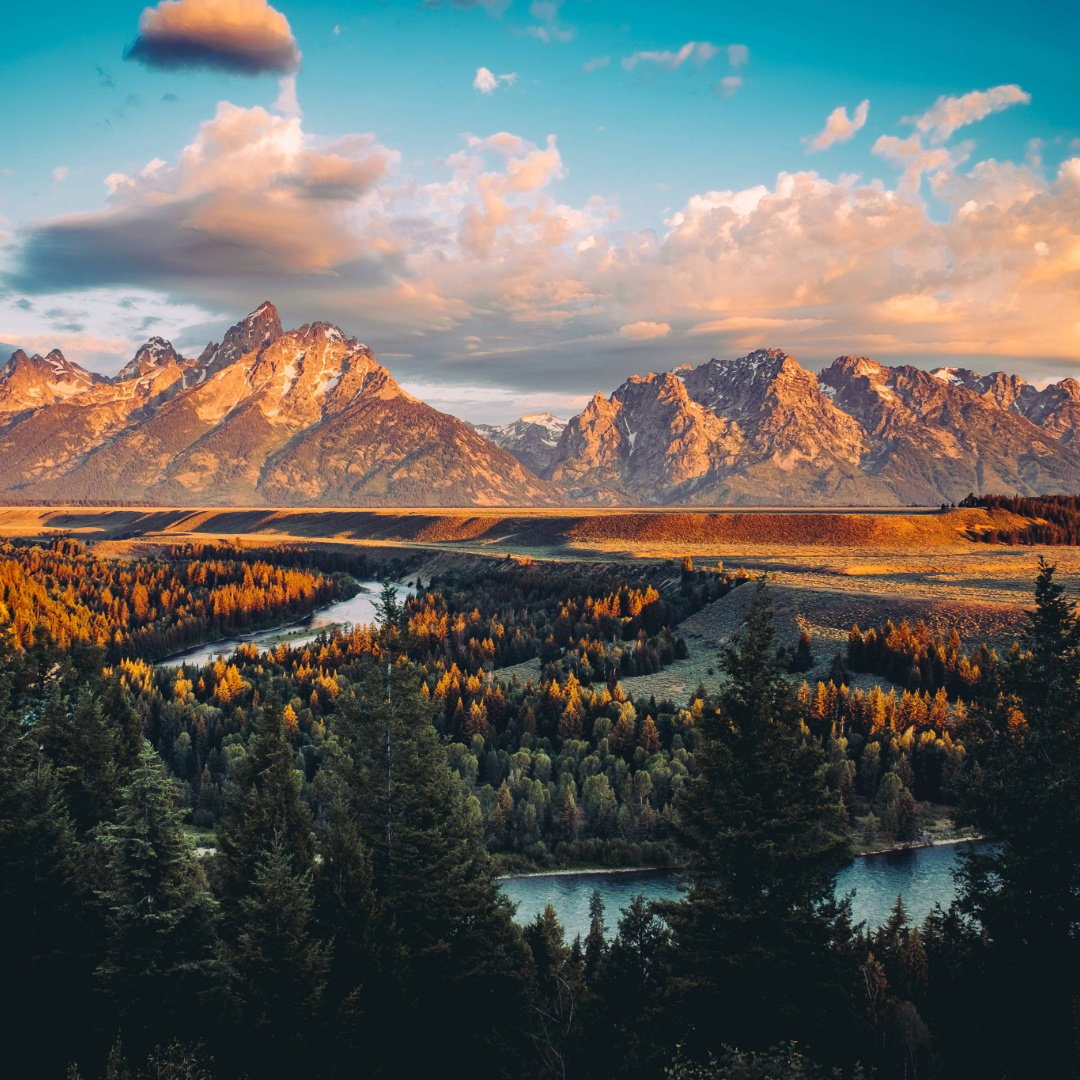
Few drives capture the spirit of the open road quite like the journey from Wyoming’s Grand Teton National Park to Yellowstone National Park. These two celebrated parks are directly connected by the John D. Rockefeller Jr. Memorial Parkway, so you can travel between them without ever leaving the region’s memorable landscape.
That connection is what makes the Grand Tetons to Yellowstone road trip one of the most rewarding in the country. In just a short stretch of road, you move from towering mountain peaks to steaming geothermal basins, with lakes, rivers and wildlife along the way.
This guide covers how to plan your route, where to stop and how to shape your trip based on the time you have. Let’s start with the distance and what to expect on the drive.
Key Takeaways
|
How Far Is Grand Teton From Yellowstone?
Grand Teton and Yellowstone connect directly at their borders, with a distance of about 31 miles between park boundaries. In ideal conditions, the drive from Grand Teton’s northern edge to Yellowstone’s South Entrance takes approximately 40 to 45 minutes.
However, most travelers will drive significantly farther depending on where they start and what they plan to see along the way. For example, a typical Grand Teton to Yellowstone Drive can take around 2 to 3 hours (roughly 100–130 miles) due to lower speed limits, traffic and time spent at stops.
The parks meet at Yellowstone’s South Entrance, where Grand Teton National Park transitions into Yellowstone National Park. While the distance itself is relatively short, the experience of traveling between the parks is best enjoyed at a slower pace.
Can You Drive From Grand Teton National Park to Yellowstone National Park?
Yes, you can drive directly from the Tetons to Yellowstone without leaving the protected park system. The two parks are connected by a scenic corridor known as the John D. Rockefeller Jr. Memorial Parkway.
This makes it easy to visit both in a single trip, with no complicated navigation or detours required. The transition feels gradual, with forests, lakes and rivers guiding you from one landscape into the next.
What Is the Best Route for the Grand Teton to Yellowstone Drive?
The best route for the Grand Tetons to Yellowstone drive follows the main parkway north from Grand Teton into Yellowstone through the South Entrance. It’s a straightforward drive, but one that rewards you when you take your time.
As you head north from the Tetons, the scenery gradually changes. Mountain views give way to dense forests, then gradually to the geothermal features that define Yellowstone. It’s a subtle transition that makes the journey feel like part of the experience, not just a way to get from one place to another.
Even on a simple route like this, planning ahead makes a difference. Having a quick-reference map on hand, like an easy-to-fold Wyoming and Montana map, can help you stay oriented between park entrances and key stops, especially where service is limited.
Best Stops on the Grand Tetons to Yellowstone Road Trip
A short drive doesn’t mean a rushed one. Along this route, a handful of thoughtfully chosen stops can turn your journey into something you’ll remember long after you leave the parks.
Oxbow Bend
Oxbow Bend is one of the most peaceful places to pause along the drive. In the early morning, the water is often still, creating a quiet, reflective atmosphere where wildlife is more active, and the surrounding landscape feels calm and unhurried.
Schwabacher Landing
Schwabacher Landing offers a more tucked-away experience, where you can step closer to the river and the base of the Tetons. It’s a place to slow down, take in the surroundings and enjoy a quieter moment away from the busier areas.
Jackson Lake Lodge
Jackson Lake Lodge is an ideal place to reset during your drive. Large windows frame the Tetons in the distance, giving you a sense of scale while you grab a meal, stretch your legs or simply take a break before continuing north.
West Thumb Geyser Basin
West Thumb Geyser Basin signals your arrival into Yellowstone’s geothermal terrain. Here, steaming pools sit beside the lake, creating a striking contrast and signaling that the environment is beginning to shift.
Hayden Valley
Hayden Valley opens into a wide, expansive landscape where wildlife often moves across the valley floor. Early morning and evening are especially rewarding times to visit, when you can watch animals move through the open terrain.
Together, these stops help shape the journey between the parks, offering moments to pause, helping you decide where to slow down and where to keep moving.
Should You Drive Grand Tetons to Yellowstone or Yellowstone to Grand Teton?
You can drive either direction, and both routes follow the same road. The experience, however, can feel slightly different depending on timing and travel flow.
Driving north into Yellowstone often means starting your day in the mountains and gradually moving into geothermal terrain. Driving south offers the reverse experience, ending your journey with the Tetons rising into view.
Crowd patterns, lighting and where you begin your trip can all influence which direction feels best. Early mornings and late afternoons tend to have lighter traffic and softer lighting, offering a more relaxed feel. Meanwhile, mid-day travel can come with heavier traffic, especially near major viewpoints. In most cases, the decision comes down to where you’re starting and how you want your journey to unfold.
How Many Days Do You Need to See Yellowstone and Grand Teton?
Most travelers need between 3 and 7 days to see both parks, depending on how much time you want to spend exploring. If you’re wondering how many days to see Yellowstone and Grand Teton, the answer depends on your pace.
- 3 days: Focus on key stops and highlights in both parks, with limited time for longer stops
- 5–7 days: A more complete experience, with time to explore must-see areas and take your time
In general, plan to spend about 2 days in Grand Teton and at least 3 days in Yellowstone to cover the main areas without feeling rushed.
Grand Teton and Yellowstone Itinerary Ideas
Planning a Grand Teton and Yellowstone itinerary doesn’t have to be complicated. A few simple frameworks can help you map out your stops and make the most of your time.
3-Day Grand Teton and Yellowstone Itinerary
Focus on the highlights, moving efficiently between the most well-known areas in both parks. Spend your first day in Grand Teton with stops like Oxbow Bend and Jenny Lake, then head north toward Yellowstone. In Yellowstone, prioritize major landmarks such as Old Faithful, Grand Prismatic Spring and the Grand Canyon of Yellowstone.
5-Day Grand Teton and Yellowstone Itinerary
A balanced trip gives you time to explore both parks without rushing. Spend 2 days in Grand Teton, including scenic drives, short hikes and time around Jackson Lake or Jenny Lake. Then dedicate 3 days to Yellowstone’s Lower and Upper Loops, with time for West Thumb Geyser Basin, Hayden Valley and additional stops like Norris Geyser Basin or Lamar Valley.
7-Day Grand Teton and Yellowstone Itinerary
A longer Grand Teton and Yellowstone trip allows you to slow down and explore more deeply. Spend extra time in Grand Teton for longer hikes or quieter areas like Schwabacher Landing, then explore Yellowstone at a relaxed pace, including both loops, wildlife areas like Lamar Valley and lesser-visited stops outside the busiest corridors.
Mapping out your route in advance, using tools like a road atlas and national park guide, can help you stay organized while keeping your trip flexible.
When Is the Best Time for a Grand Teton and Yellowstone Trip?
The best time for a trip to Yellowstone and the Grand Teton is typically late spring through early fall, when most roads and facilities are open.
- Spring (late): Fewer crowds, active wildlife and cooler temperatures, though some roads may still be closed
- Summer: Full access to both parks with long daylight hours, but higher visitor numbers
- Fall: Quieter conditions with changing landscapes and fewer crowds, though some closures begin
- Winter (limitations): Limited road access and services, with travel restricted in many areas. However, the serene, snow-covered landscapes can be worth the challenges.
Grand Teton and Yellowstone offer year-round beauty; there’s no “bad” time to visit. It’s all about knowing what type of scenery you crave.
Seasonal Road Closures and Travel Considerations
Road access can vary significantly depending on the season, especially at higher elevations.
- The South Entrance typically opens in late spring and closes in fall
- Winter conditions limit access to many park roads
- Always check current road and weather conditions before your trip
Check the National Park Service for road updates.
Travel Tips for a Smooth Grand Teton to Yellowstone Drive
A little preparation goes a long way in helping you fully enjoy the journey between these two parks. Here are some simple planning and travel tips to keep in mind:
- Cell service is limited, so download park maps in advance and plan ahead before entering the parks
- Carry a physical map as a backup; using a detailed Wyoming state atlas can help you navigate when plans change
- Wildlife is common along the road, so stay alert and keep a safe distance
- Start early to avoid crowds and make the most of your day
- Fuel and services can be limited, so plan stops accordingly
- Keep traffic moving by using pull-offs instead of stopping in the road
- Take time to explore beyond the main pull-offs when possible
- Follow “Leave No Trace” principles to help protect the parks
For added confidence, consider bringing a Wyoming state atlas to help you stay oriented throughout your trip.
Ready for the Road? Your Grand Teton to Yellowstone Drive Starts Here
Traveling between Grand Teton and Yellowstone is one of the most accessible and rewarding journeys you can take on the open road. With a clear route, a few well-chosen stops and a plan that fits your pace, it’s easy to turn a short drive into a memorable experience.
Preparation makes all the difference, especially in areas where conditions can change and service is limited. With the right tools and a reliable plan, you can explore with confidence and focus on the journey ahead.
Plan your 2-park road trip with confidence using Rand McNally Publishing’s trusted road atlases and paper road maps so you’re ready for every mile ahead.
FAQ: Grand Tetons to Yellowstone Road Trip
Can you do the Grand Tetons and Yellowstone parks in one trip?
Yes, you can do the Grand Teton National Park and Yellowstone in one trip because the parks are directly connected by the John D. Rockefeller Jr. Memorial Parkway. Their proximity makes it easy to explore both in a single, continuous journey.
Can you drive through Yellowstone to get to Grand Teton?
Yes, you can drive through Yellowstone to get to Grand Teton using the connecting John D. Rockefeller Jr. Memorial Parkway between the 2 parks. This allows for a seamless drive without leaving the park system.
Which is better, Grand Teton or Yellowstone?
Neither Grand Teton nor Yellowstone is better, as each offers a different experience. Grand Teton features dramatic mountain landscapes, while Yellowstone is known for geothermal features and wildlife.
How far is Grand Teton Park from Yellowstone?
Grand Teton is about 31 miles from Yellowstone at their closest park boundaries, but most travelers drive much farther depending on their route. A typical drive from Jackson through Grand Teton into Yellowstone is around 100–130 miles and takes about 2 to 3 hours.
Is Jackson Hole closer to Yellowstone or Grand Teton?
Jackson Hole is closer to Grand Teton, with the park entrance located just a short drive from town. Yellowstone is farther north, typically requiring at least 1 to 2 additional hours of travel.
When is the best time to visit Yellowstone and Grand Teton?
The best time to visit Yellowstone and Grand Teton is late spring through early fall, when most roads and services are open. Summer offers full access, while spring and fall bring fewer crowds and changing conditions.
Additional Rand McNally Travel Blogs to Read:
- Montana and Wyoming Road Trip
- Going-to-the-Sun Road
- Most Scenic Places in the U.S.
- Spring Break Road Trips
- National Parks Road Trip
- Southwest Road Trip