
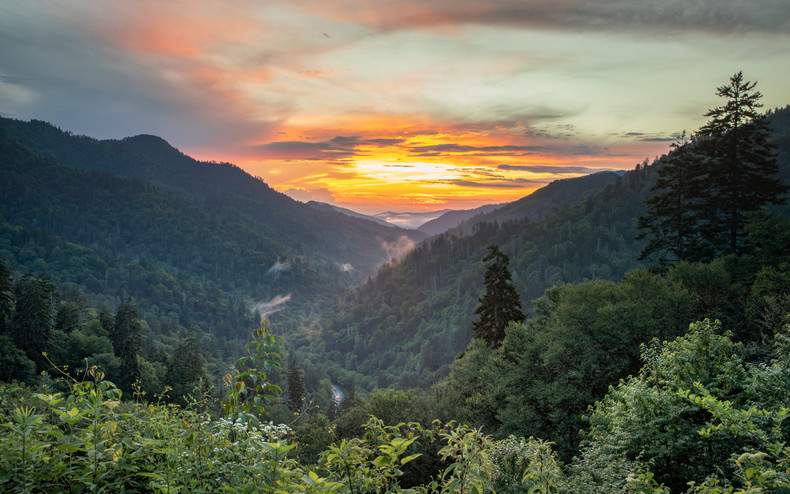
Straddling Tennessee and North Carolina, the Great Smoky Mountains National Park offers several routes that make the journey as memorable as the destination. A drive through the park can take you across high mountain passes, along rushing rivers and into broad valleys where elk and black bears roam.
The best Smoky Mountain scenic drive depends on what you want to experience. Newfound Gap Road climbs through changing forest ecosystems, Cades Cove Loop Road circles a wildlife-rich valley and Little River Road follows its namesake waterway past waterfalls and wooded picnic areas. Other roads lead to historic homesteads, quieter corners and far-reaching mountain outlooks.
This guide compares the best Smoky Mountain scenic drives, highlights worthwhile stops and helps you plan a route that fits your time and interests.
Key Takeaways
|
What Is the Most Scenic Drive in the Smoky Mountains?
Newfound Gap Road is a strong choice for first-time visitors, but the most rewarding route depends on whether you prefer mountain panoramas, wildlife, waterfalls, history or quieter roads.
A scenic drive in Smoky Mountains country can look very different depending on the route. Use this quick guide to find the experience that best fits your trip.
|
Scenic Drive |
Best For/Key Experience |
Approx. Distance |
Time to Allow |
Road/Pavement Considerations |
|
Newfound Gap Road + Kuwohi Road |
Mountain passes and high elevations |
33 miles + 7-mile Kuwohi Road |
2–4 hours with stops |
Paved; Kuwohi Road closes seasonally |
|
Cades Cove Loop Road |
Wildlife and history |
11 miles |
2–4 hours |
Paved, one-way loop; heavy traffic is common |
|
Little River Road |
Rivers and waterfalls |
About 18 miles |
1–2 hours with stops |
Paved, winding road |
|
Roaring Fork Motor Nature Trail |
Forests and historic sites |
5.5 miles |
1–2 hours |
Narrow, one-way road; seasonal access |
|
Cataloochee Valley |
Wildlife and a quieter valley |
Varies by approach |
2–3 hours |
Narrow, winding gravel access road |
|
Foothills Parkway |
Mountain panoramas and lower-traffic cruising |
About 33 miles across the completed western section |
1–2 hours with stops |
Paved; continuous completed western section with multiple overlooks |
What Are the Best Scenic Drives in the Great Smoky Mountains?
The best scenic drives in the Smokies offer distinctly different experiences, so it helps to choose your route based on what you most want to see.
Newfound Gap Road and Kuwohi Road: Mountain Passes and High-Elevation Views
Newfound Gap Road, or U.S. 441, crosses the heart of the park for 33 miles between Gatlinburg, Tennessee, and Cherokee, North Carolina. For many first-time visitors, it’s the quintessential Smoky Mountains drive.
Stop at Newfound Gap, where the Tennessee-North Carolina state line crosses the mountains and the Appalachian Trail passes nearby. On the North Carolina side, Oconaluftee Visitor Center provides another worthwhile stop, while Sugarlands Visitor Center sits near the Tennessee entrance.
Kuwohi Road, formerly Clingmans Dome Road, branches from Newfound Gap and climbs 7 miles toward Kuwohi, the highest point in Great Smoky Mountains National Park. The road typically closes in winter, so check current conditions before adding it to your route.
A Tennessee state map and North Carolina state map can help you see how the route connects with Gatlinburg, Cherokee and the roads beyond the park.
Cades Cove Loop Road: Wildlife, History and Valley Landscapes
Cades Cove Loop Road circles an 11-mile loop through a valley surrounded by mountains, offering one of the park’s best combinations of wildlife, Appalachian history and open landscapes.
Look for white-tailed deer, wild turkeys, black bears and coyotes while keeping a safe distance from wildlife. Historic stops include the Primitive Baptist Church, Methodist Church, John Oliver Cabin and Cable Mill area.
The National Park Service recommends allowing at least 2–4 hours to drive the loop and explore stops. Traffic can move slowly during summer and fall, especially when wildlife appears near the road. The loop also closes to motor vehicles on designated Wednesdays from May through September.
Little River Road: Rivers, Waterfalls and Forest Scenery
Little River Road follows roughly 18 miles of forest and river between the Sugarlands area and Townsend, creating one of the most relaxing scenic drives in the Smokies.
Pull over at The Sinks to watch the Little River tumble through a rocky gorge, catch a roadside glimpse of Meigs Falls or stop at Metcalf Bottoms for a picnic beside the water. Townsend Wye is another popular place to pause near the western side of the park.
This route also connects naturally with Cades Cove, making the two drives easy to pair when you have enough time.
Roaring Fork Motor Nature Trail: A Quiet Forest Drive Near Gatlinburg
Roaring Fork Motor Nature Trail packs rushing streams, old-growth forest and historic mountain structures into a narrow 5.5-mile, one-way road near Gatlinburg.
The route passes log cabins, gristmills and other remnants of early mountain communities. Before entering the motor trail, you can stop at the Noah “Bud” Ogle farmstead or access trails leading toward Rainbow Falls and Grotto Falls.
Among the scenic drives Great Smoky Mountains visitors can choose, Roaring Fork feels particularly intimate because the narrow road keeps you close to the forest and water.
Cataloochee Valley Road: Wildlife and a More Remote Smokies Experience
Cataloochee Valley rewards travelers willing to venture into a quieter section of the park with elk, historic buildings and broad mountain meadows.
Elk often gather in the valley during the early morning and evening. You can also explore structures such as Palmer Chapel, the Caldwell House and other remnants of the community that once lived here.
The Cove Creek Road approach includes a narrow, winding gravel section with steep drop-offs and no guardrails in places. That makes Cataloochee a better choice when you have time to slow down rather than squeeze another stop into a packed itinerary.
Foothills Parkway: Mountain Views and a Relaxed Drive
Foothills Parkway offers broad perspectives across the Smokies without requiring you to travel through the park’s busiest interior corridors.
A completed 33-mile western section traces the Tennessee side of the mountains, with overlooks where ridgelines seem to unfold one behind another. Within it, the Walland-to-Wears Valley section makes an especially convenient addition for travelers staying around Townsend or heading toward Pigeon Forge.
If your idea of driving in the Smoky Mountains involves fewer stops and more time enjoying the road itself, Foothills Parkway is a fitting choice.
How Can You Plan a Smoky Mountains Scenic Drive in One Day?
A 1-day trip works best when you choose 1 or 2 complementary routes instead of trying to cover every corner of the park.
For a first visit, start on Newfound Gap Road and travel between Gatlinburg and Cherokee, stopping at Newfound Gap and Oconaluftee Visitor Center. Add Kuwohi Road when it’s open and time allows. If wildlife and history matter more, devote several hours to Cades Cove and pair it with Little River Road.
If you have more time to explore, consider extending your Smokies road trip onto the Blue Ridge Parkway, which begins near the park and winds through the southern Appalachian highlands.
If you’re extending your road trip through the Smoky Mountains beyond the park, exploring smaller roads and communities or building a longer Appalachian trip, a Tennessee atlas or North Carolina atlas can provide a more detailed look at the surrounding region.
If the Smokies are one stop on a larger national park trip, a national parks road atlas can help you see the bigger picture and plan the highways and secondary roads connecting your destinations.
What Should You Know Before Driving Through the Smoky Mountains?
A little planning makes driving through the Smoky Mountains easier, especially since weather, traffic and seasonal road access can change frequently.
- Road conditions: Check National Park Service alerts and current road closures before leaving
- Seasonal access: Kuwohi Road, Roaring Fork Motor Nature Trail and other secondary roads close for part of the year
- Traffic: Allow extra time around Cades Cove, Newfound Gap and other popular areas during summer, fall and weekends
- Parking: The park has no entrance fee, but vehicles parked for more than 15 minutes generally need a parking tag
- Wildlife: Stay at least 50 yards from black bears and never stop in the roadway to watch or photograph wildlife
- Navigation: Carry a paper road map as a reliable planning resource, especially when exploring beyond the main park corridors
If you’re planning a Great Smoky Mountains driving tour, leave room in your schedule for overlooks, visitor centers and unexpected traffic rather than judging the day by mileage alone.
When Is the Best Time for a Smoky Mountain Scenic Drive?
You can enjoy a Smoky Mountain scenic drive throughout much of the year, but each season changes the landscape, road conditions and amount of traffic you may encounter.
- Spring: Wildflowers, flowing waterfalls and fresh green forests arrive alongside changing mountain weather and some lingering seasonal road closures
- Summer: Long daylight hours and lush forests make exploring easy, though popular roads and attractions draw heavier traffic
- Fall: Autumn foliage transforms the mountains in stages as color moves through different elevations, while peak-season crowds can increase drive times
- Winter: Bare trees open longer sightlines across the mountains and crowds can thin, but snow and ice may close high-elevation and seasonal roads
Always check current National Park Service road conditions before your trip, particularly if your plans include higher elevations or secondary roads.
Plan Your Smoky Mountains Road Trip With Rand McNally
The best Smoky Mountain scenic drive isn’t necessarily the one that covers the most miles. Choose the roads that match what you want to experience, then give yourself time to stop at a rushing waterfall, walk through a historic homestead or linger at a mountain overlook.
Rand McNally road atlases can help you understand how these park roads connect with Tennessee, North Carolina and the wider Appalachian region, making it easier to plan a trip that goes beyond the park.
FAQ: Smoky Mountain Scenic Drive
Can you just drive through Great Smoky Mountains National Park?
Yes. Newfound Gap Road crosses Great Smoky Mountains National Park between Gatlinburg, Tennessee, and Cherokee, North Carolina, so you can experience the park without taking a long hike.
How long does it take to drive through Great Smoky Mountains National Park?
Driving Newfound Gap Road without extended stops takes roughly 1 hour, but plan 2–4 hours if you want to visit overlooks and visitor centers. Traffic, weather and road conditions can add time.
Does it cost money to drive through the Smoky Mountains?
Great Smoky Mountains National Park does not charge an entrance fee. However, most vehicles parked inside the park for more than 15 minutes need a paid parking tag.
What is the prettiest part of the Smoky Mountains?
The answer depends on what you enjoy most. Newfound Gap and Kuwohi offer high-elevation mountain outlooks, Cades Cove opens onto a broad historic valley and Little River Road follows forest and rushing water.
What should you not miss in the Smoky Mountains?
First-time visitors should consider Newfound Gap Road, Cades Cove, Kuwohi and Oconaluftee Visitor Center. Waterfalls such as The Sinks and Meigs Falls and wildlife areas such as Cataloochee can round out a longer visit.