
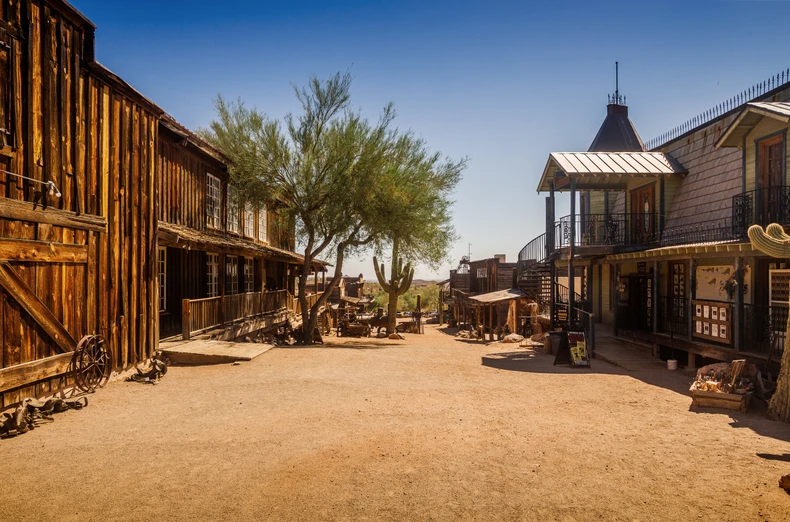
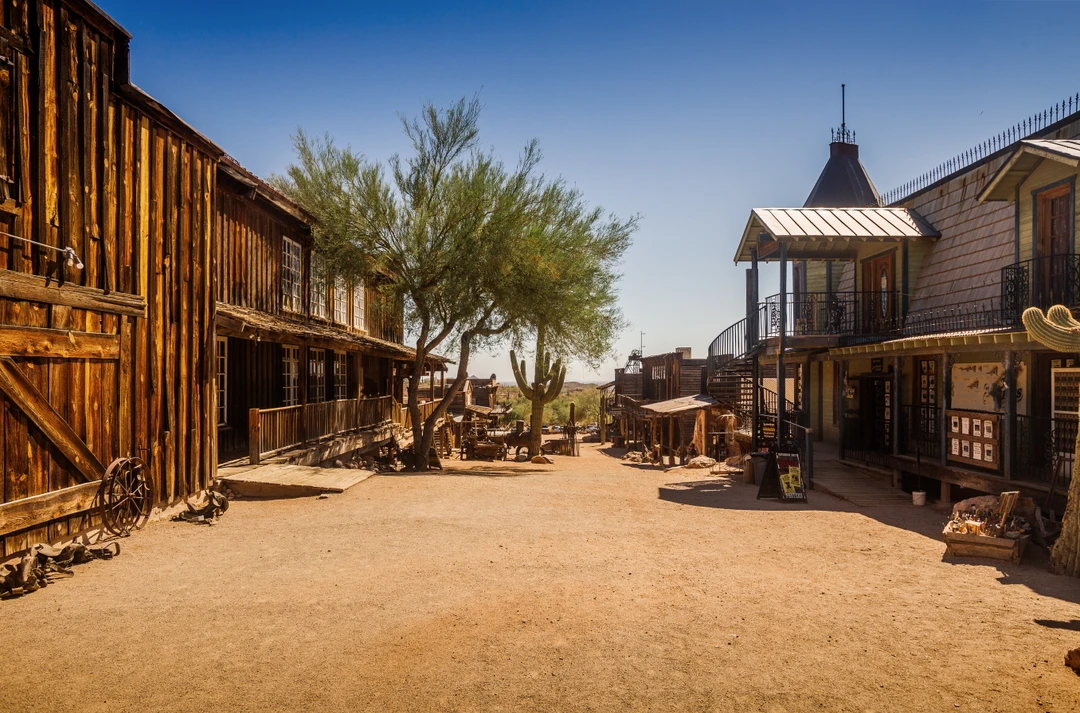
Few trips capture the spirit of the American frontier like a road trip through the towns that helped shape the Old West. Many American Old West towns still let you walk the same streets and explore the buildings where mining booms, cattle drives and frontier legends left their mark.
Some destinations remain thriving towns, while others stand preserved after their boom years ended. Together, these Old West towns let you experience the region’s layered history on a road trip built around museums, railroads, historic districts and wide-open highways.
Here are 12 places worth putting on your map.
Key Takeaways
- Many Old West communities remain active towns with preserved historic districts, museums and landmarks
- Tombstone, Deadwood, Dodge City and Cody offer some of the most recognizable connections to frontier history
- Bandera highlights Texas ranching and cowboy culture, while Virginia City and Silverton tell stories shaped by mining
- Bodie, Bannack and St. Elmo offer a different experience as preserved ghost towns
- These destinations span several Western states, so regional road trips are more practical than trying to connect all 12 at once
Do Any Wild West Towns Still Exist?
Yes, many Old Wild West towns still exist, although what you’ll find varies considerably from place to place. Some are active communities where historic buildings sit alongside modern businesses. Others preserve specific districts, museums or landmarks connected to their frontier-era past.
You can also visit former boomtowns that emptied as mines closed, railroads changed course or local economies shifted. These ghost towns offer a quieter look at what remains when a once-busy community fades away.
How to Choose Your Old West Road Trip Experience
The towns of the Old West tell different stories, so the right stop depends on what interests you most. Use this quick guide to narrow down the possibilities before plotting your route.
| If You’re Interested In... | Consider Visiting |
|---|---|
| Cowboy and cattle history | Bandera, Dodge City |
| Gold and silver mining history | Deadwood, Virginia City, Silverton |
| Frontier legends | Tombstone, Cody |
| Southwestern history and culture | Santa Fe |
| Route 66 and mining history | Oatman |
| Preserved ghost towns | Bodie, Bannack, St. Elmo |
9 Wild West Towns to Visit Across America
The best Wild West towns to visit depend on which parts of Western history you want to explore. These nine destinations offer experiences ranging from preserved mining districts and heritage railroads to museums dedicated to cowboy, Indigenous and frontier history.
Tombstone, Arizona
Claim to fame: Tombstone earned its place among the most famous Wild West towns through the 1881 gunfight at the O.K. Corral and the stories surrounding Wyatt Earp, Doc Holliday and other figures of the era.
Highlights: Walk the wooden boardwalks of Allen Street, visit the O.K. Corral and step inside the Bird Cage Theatre. Daily historical reenactments add a living-history element to a town that still embraces its frontier past.
Tombstone also fits naturally into a longer trip across the desert Southwest. To make it one stop on a bigger adventure, our Southwest road trip guide can help you connect historic communities with other memorable places across Arizona, New Mexico, Utah and Nevada.
Deadwood, South Dakota
Claim to fame: Deadwood began as a Black Hills gold camp in 1876 and became associated with figures including Wild Bill Hickok and Calamity Jane. Its historic district was designated a National Historic Landmark in 1961.
Highlights: Visit the Adams Museum for Black Hills history, explore the Days of ’76 Museum and head to Mount Moriah Cemetery, where Wild Bill Hickok and Calamity Jane are buried.
Deadwood also pairs well with a western South Dakota road trip. Our Badlands Loop Road travel guide can help you plan another memorable drive through this part of the state.
Bandera, Texas
Claim to fame: Bandera’s ranching traditions and role as a staging point for cattle drives helped earn it the nickname “Cowboy Capital of the World.” The community still celebrates its Western heritage through ranch experiences, rodeos and local events.
Highlights: Explore the Frontier Times Museum to learn about Texas frontier history, spend time at a guest ranch or experience the Hill Country on horseback. Museum exhibits cover subjects ranging from Native American history to ranching, rodeo and cowboy culture.
Virginia City, Nevada
Claim to fame: Virginia City grew around the Comstock Lode, the first major silver discovery in the United States, made in 1859.
Highlights: Walk historic C Street, explore mining museums and ride the Virginia & Truckee Railroad through the surrounding Comstock region. Historic buildings, saloons, mine sites and wooden boardwalks give you plenty to explore beyond a single museum stop.
Cody, Wyoming
Claim to fame: William F. “Buffalo Bill” Cody and several partners founded Cody in 1896. His influence remains visible throughout the town.
Highlights: Give yourself time for the Buffalo Bill Center of the West, which houses five museums covering subjects including Buffalo Bill, Plains Indian cultures, Western art and natural history. Old Trail Town adds a collection of historic frontier buildings and artifacts.
Cody also makes sense as part of a broader Rocky Mountain trip. Our Montana and Wyoming road trip guide can help you connect Western history with nearby mountain landscapes and other regional destinations.
Dodge City, Kansas
Claim to fame: Dodge City grew into a major cattle town and became closely associated with saloons, the cattle-drive era and lawmen such as Wyatt Earp and Bat Masterson.
Highlights: Start at Boot Hill Museum, where exhibits and recreated Front Street spaces explore Dodge City in the 1870s and 1880s. You can also take a Historic Trolley Tour, follow the Trail of Fame and see surviving wagon ruts from the Santa Fe Trail west of town.
Oatman, Arizona
Claim to fame: Oatman combines its gold-mining roots with another chapter of American road history: Route 66. Few Wild West cities pack this much character onto one main street.
Highlights: Meet the wild burros descended from pack animals used around local mines, watch one of the town’s staged gunfight performances and drive the historic Route 66 Oatman Road through the Black Mountains. The Bureau of Land Management identifies this 42-mile road as one of the last and best-preserved segments of original Route 66.
Planning to make Oatman part of a longer Mother Road adventure? Our Route 66 road trip guide covers stops and planning considerations across the historic highway.
Silverton, Colorado
Claim to fame: Silverton grew from Colorado’s 19th-century gold and silver mining era, and its railroad connection remains one of the most memorable ways to reach town.
Highlights: Ride the Durango & Silverton Narrow Gauge Railroad through the San Juan Mountains, explore Silverton’s historic streets and learn about the region’s mining and railroad heritage. Full Durango-to-Silverton service runs seasonally on a line completed in 1882, so check the schedule before you go.
Santa Fe, New Mexico
Claim to fame: Santa Fe brings a much longer and more complex history to this list than many traditional old cowboy towns. The city’s story encompasses Indigenous history, Spanish colonization, Mexican rule, the Santa Fe Trail and later U.S. territorial history.
Highlights: Begin around Santa Fe Plaza, which has served as a center of the city for more than 400 years. The surrounding historic district provides a starting point for learning how Pueblo, Spanish, Mexican and American histories have shaped Santa Fe.
3 Preserved Old West Ghost Towns
Not all American Old West towns grew into modern communities. Former mining settlements across the West still preserve empty streets, weathered buildings and traces of everyday life, making them especially fitting stops for an October road trip.
Bodie, California
Claim to fame: Bodie is one of the best-preserved gold-mining ghost towns in California, with surviving buildings maintained in a state of “arrested decay.”
Highlights: Walk deserted streets and peer into preserved interiors that still contain items left behind by former residents. Bodie sits at about 8,400 feet in the eastern Sierra, and road access can be difficult or limited in winter, so check current conditions before making the drive.
Bannack, Montana
Claim to fame: Bannack stands at the site of Montana’s first major gold discovery in 1862 and later became the territory’s first capital.
Highlights: More than 50 historic structures line Main Street at Bannack State Park. Walking through the preserved town offers a quieter experience than the reenactments and busy commercial districts found at some living Old West destinations.
St. Elmo, Colorado
Claim to fame: St. Elmo developed around mining and rail activity in the Colorado mountains beginning around 1880 before declining as mines closed and transportation patterns changed.
Highlights: Explore the historic district’s wooden storefronts and cabins, surrounded by the mountain landscape that once supported the local mining industry. The seasonal St. Elmo General Store still operates in the historic community.
How to Plan a Road Trip to Famous Western Towns
Visiting several famous Western towns works best when you treat them as stops within a regional road trip.
- Choose a region: Focus on a cluster of destinations in the Southwest, Rocky Mountains, Great Plains or another part of the West to keep driving distances manageable
- Map realistic driving distances: Look at mileage, estimated drive times, fuel stops and overnight options before deciding how many towns fit comfortably into your itinerary
- Build around a larger trip: Pair historic towns with nearby national parks, historic sites, byways or other destinations that interest you
- Check seasonal access and hours: Mountain roads, ghost towns, museums, railroads and other attractions may operate seasonally or have changing access conditions
- Leave time to explore: Museums, walking tours, train rides, ranch experiences and historic districts deserve more time than a quick roadside stop
- Keep a printed map handy: Our paper road maps and road atlases make it easier to see how towns, highways and potential detours connect, especially when cell service becomes unreliable
Explore the Old West Beyond the Legends
The stories of the American West stretch far beyond saloons and shootouts. Visiting these communities can introduce you to mining history, ranching traditions, Indigenous cultures, migration, railroads and the people who built lives in a rapidly changing region.
Pick the places that speak to your interests, trace a manageable route and give yourself time to experience what remains. A detailed Rand McNally Publishing map or atlas can help turn a handful of points on the page into your next journey through the West.
FAQ: American Old West Towns
What was the deadliest town in the Old West?
No single Old West town can definitively claim the title of “deadliest,” because historical records and definitions vary. Places such as Dodge City, Tombstone and Deadwood developed violent reputations, but popular Western stories have also amplified those reputations over time.
What was the wildest town in the Old West?
Dodge City, Deadwood and Tombstone are frequently associated with the wilder side of the Old West, but there is no objective historical measure for the “wildest” town. Each developed its reputation through a mix of documented events, local history and eventual legend.
What is the largest abandoned town in America?
There is no universally accepted “largest” abandoned town in America because rankings depend on how a ghost town is defined and measured. Bodie is among the country’s most substantial preserved mining ghost towns, with more than 100 historic buildings still standing.
Additional Rand McNally Travel Blogs to Read:
- Most Scenic Places in the U.S.
- Grand Tetons to Yellowstone
- Island in the Sky Canyonlands
- National Park Road Trips
- Grand Circle Road Trip
- RV Road Trip Adventure